Read in 10 seconds:
- Measure the actual space before buying a balloon garland.
- Your garland length should follow the shape you want, not simply the width of the wall.
- Use balloon size, fullness, and extra balloons to figure out how much you really need.
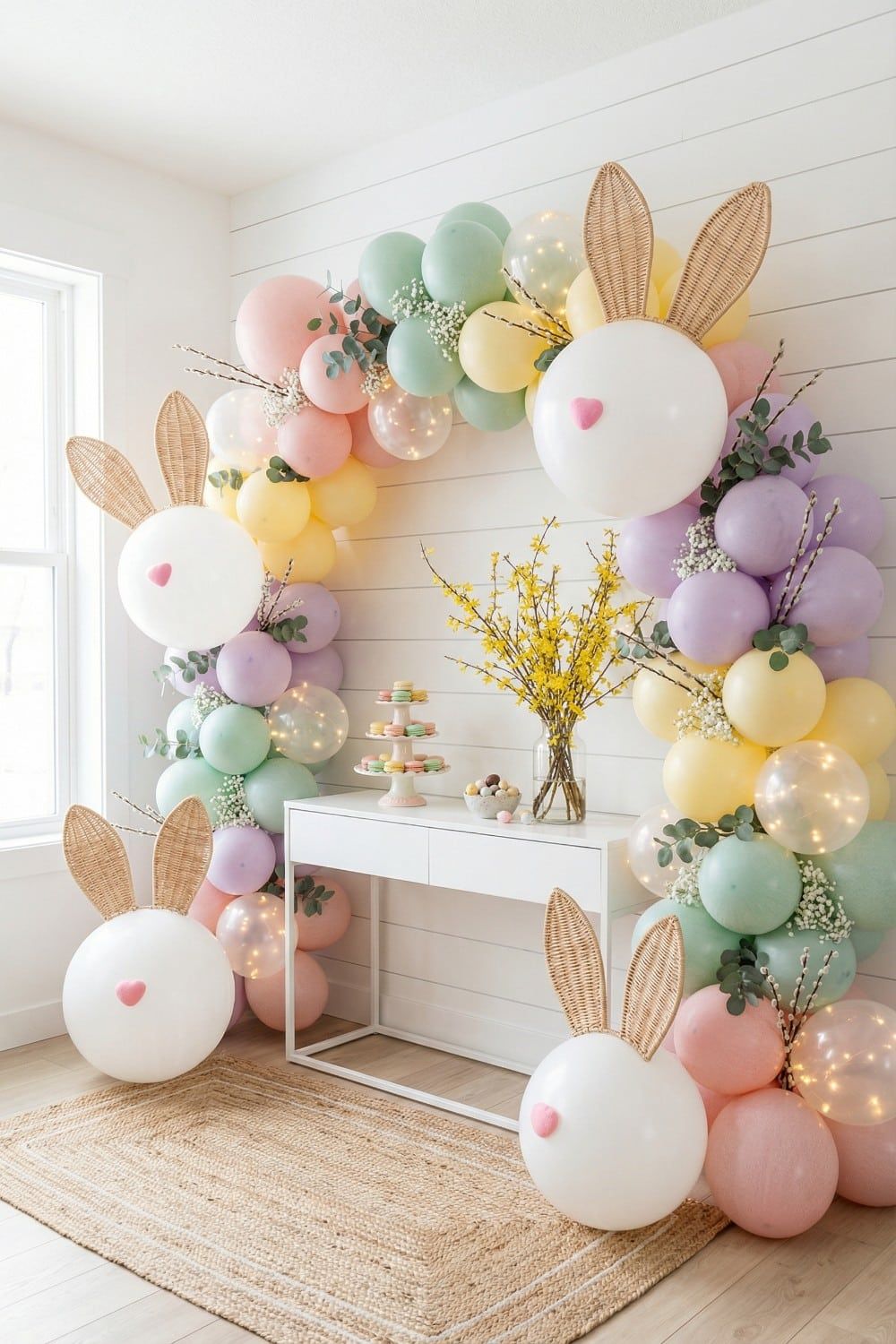
If you’ve ever bought a balloon garland kit because the picture on the package looked so cute… only to realize it barely covers your wall, welcome to the club.
I have absolutely stood in my living room surrounded by half-inflated balloons thinking, “Okay. So apparently I needed more than one bag.”
And then Andrew walked in.
He looked at the pile of balloons, looked at me, and wisely said nothing.
The tricky part is that figuring out how big a balloon garland should be isn’t as simple as measuring your wall and buying that exact length. A garland needs room to curve, overlap, cluster, and sometimes trail down the side of a backdrop.
Plus, those gorgeous Pinterest garlands usually mix several balloon sizes. So a 10-foot garland isn’t necessarily made from the same number of balloons every time.
Here’s the party decoration size guide I wish I’d had before my first balloon-garland adventure.
Measure the Space, Not the Wall
This is probably the biggest mistake I see parents make.
You look at your wall and think:
“It’s 10 feet wide, so I’ll get a 10-foot balloon garland.”
Makes sense, right?
Not always.
If your garland is going straight across the top of a backdrop, sure, you’re basically working with the width of the space.
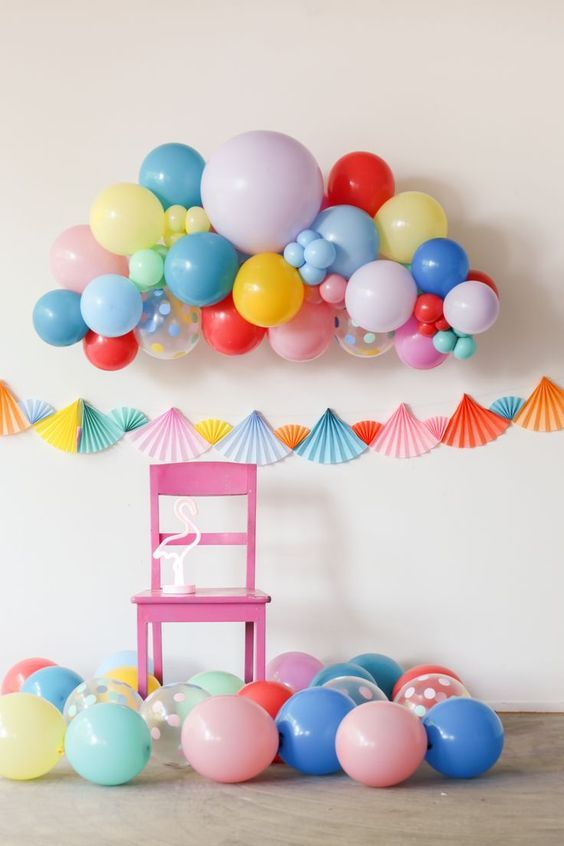
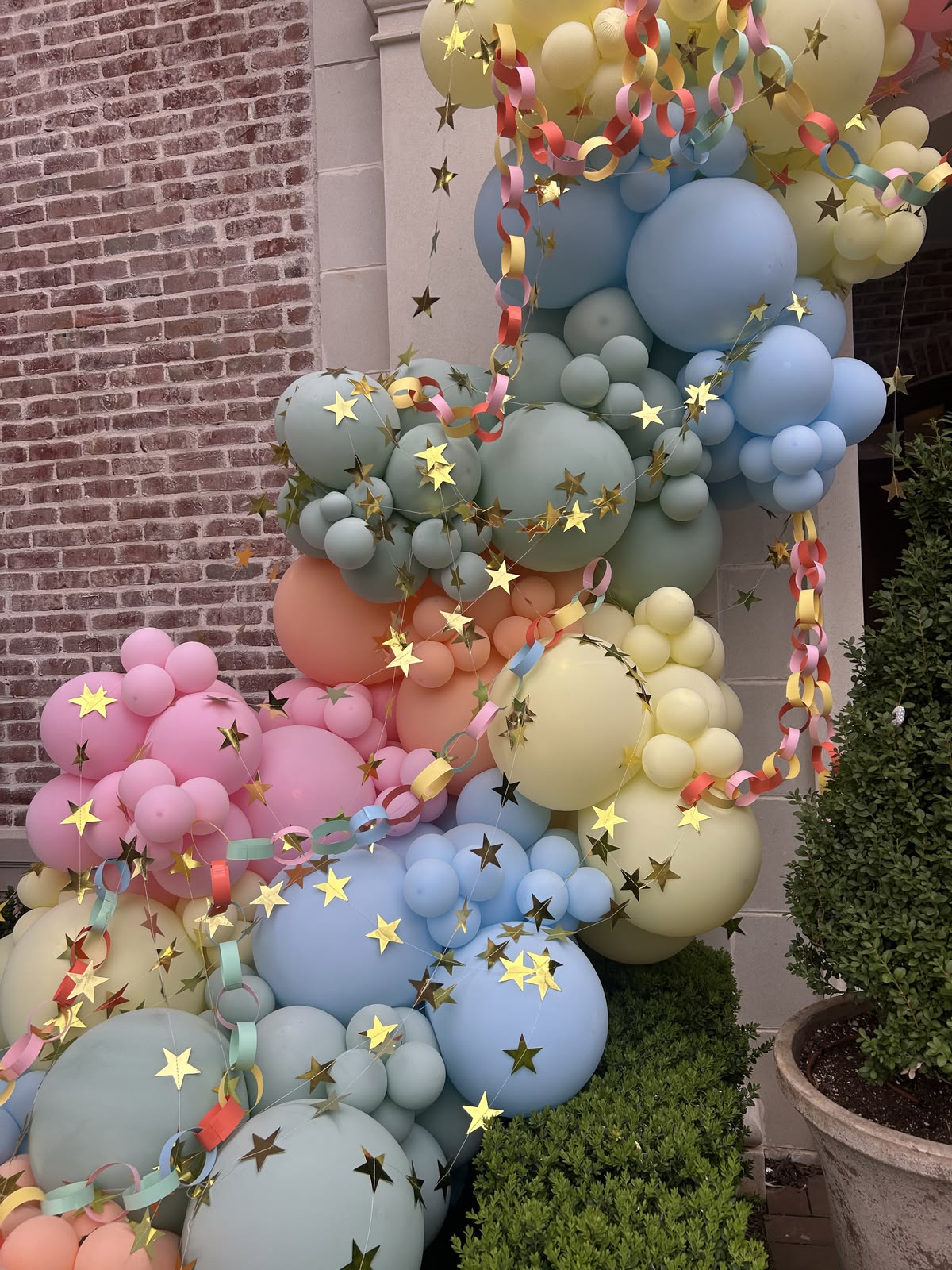
But if you’re making one of those pretty organic garlands that starts in the top corner, sweeps across the backdrop, and hangs down one side, you need to measure the path of the garland.
I learned this the annoying way.
The wall might be 8 feet wide, but if your garland curves across the top and drops another 3 feet down the side, you’ve suddenly got a much longer decoration.
My favorite measuring trick
Don’t fight with a measuring tape around curves.
Grab a piece of string.
Seriously.
Run the string along the exact path you want your balloon garland to follow. Mark where the garland starts and ends, then lay the string flat and measure it.
That measurement is your approximate garland length.
It’s much easier than standing there holding a tape measure while also trying to imagine what 12 feet of balloons is going to look like.
And yes, your kids will probably steal the string halfway through.
Mine would.
Here are a few more resources that made party planning easier for me
So, How Big Should Balloon Garland Be?
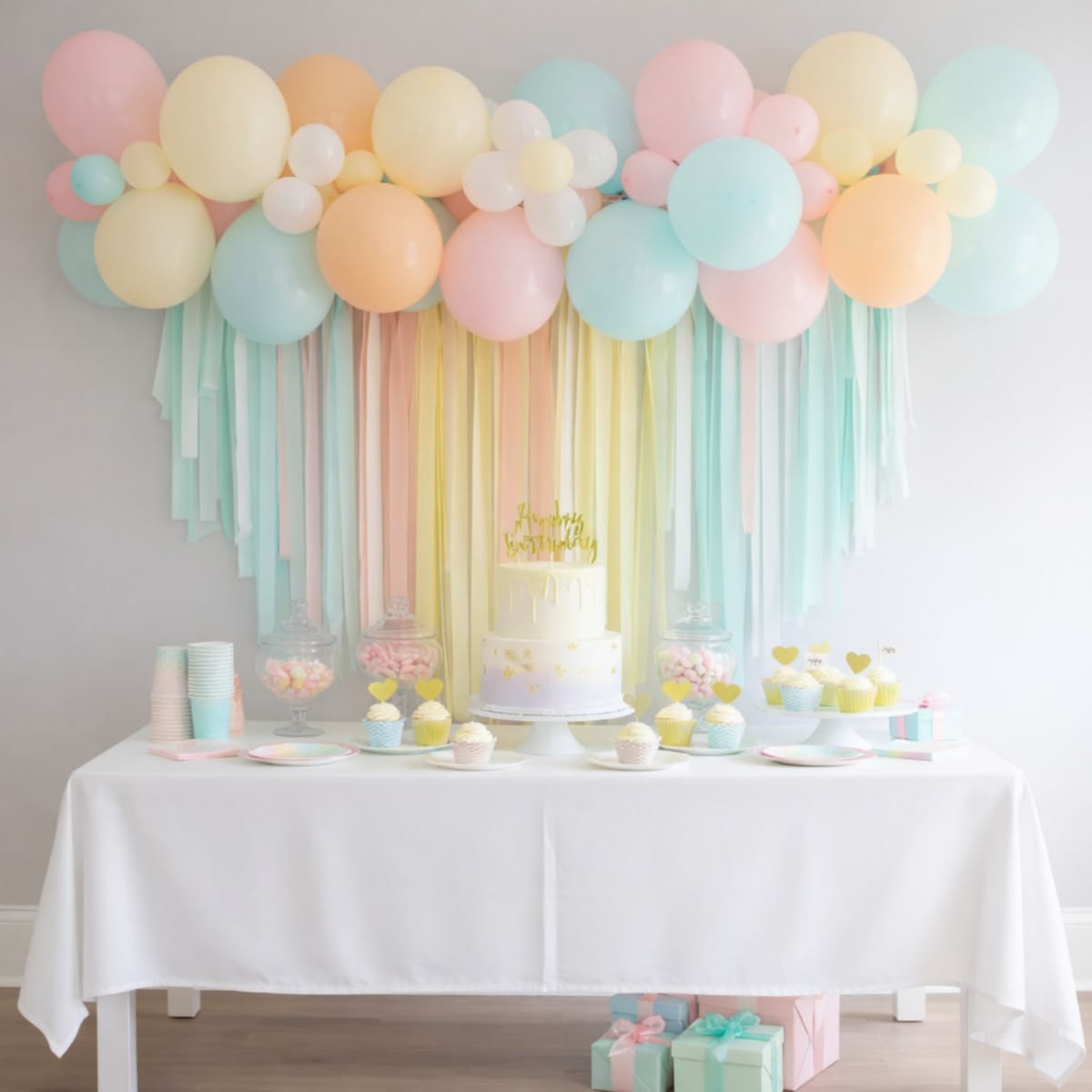
There isn’t one magic size because it depends on the space and the look you’re going for.
For a typical birthday party at home, I’d start with these rough ranges:
| Party Space | Garland Length to Consider |
| Small dessert table | 5–7 ft |
| Small photo backdrop | 7–10 ft |
| Standard backdrop wall | 8–12 ft |
| Large backdrop | 12–16 ft |
| Long wall or statement setup | 16–20+ ft |
These aren’t rules carved into a balloon-shaped stone tablet.
They’re starting points.
A small 6-foot garland can look fantastic above a cake table. A 12-foot garland can make a plain wall feel like an actual party backdrop.
The important thing is that the garland should have enough visual weight for the space without completely swallowing everything around it.
Because, unfortunately, more balloons does not automatically equal better.
Sometimes it just equals “Where am I supposed to put the cake?”
Think About What the Garland Is Actually Framing
Before buying anything, ask yourself:
What am I trying to make the balloons frame?
Maybe it’s:
- a birthday cake
- a dessert table
- a welcome sign
- a photo backdrop
- a gift table
- a doorway
- a large number sign
- the entire party table
This makes choosing the size much easier.
For a cake or dessert table
You usually don’t need a massive wall-to-wall garland.
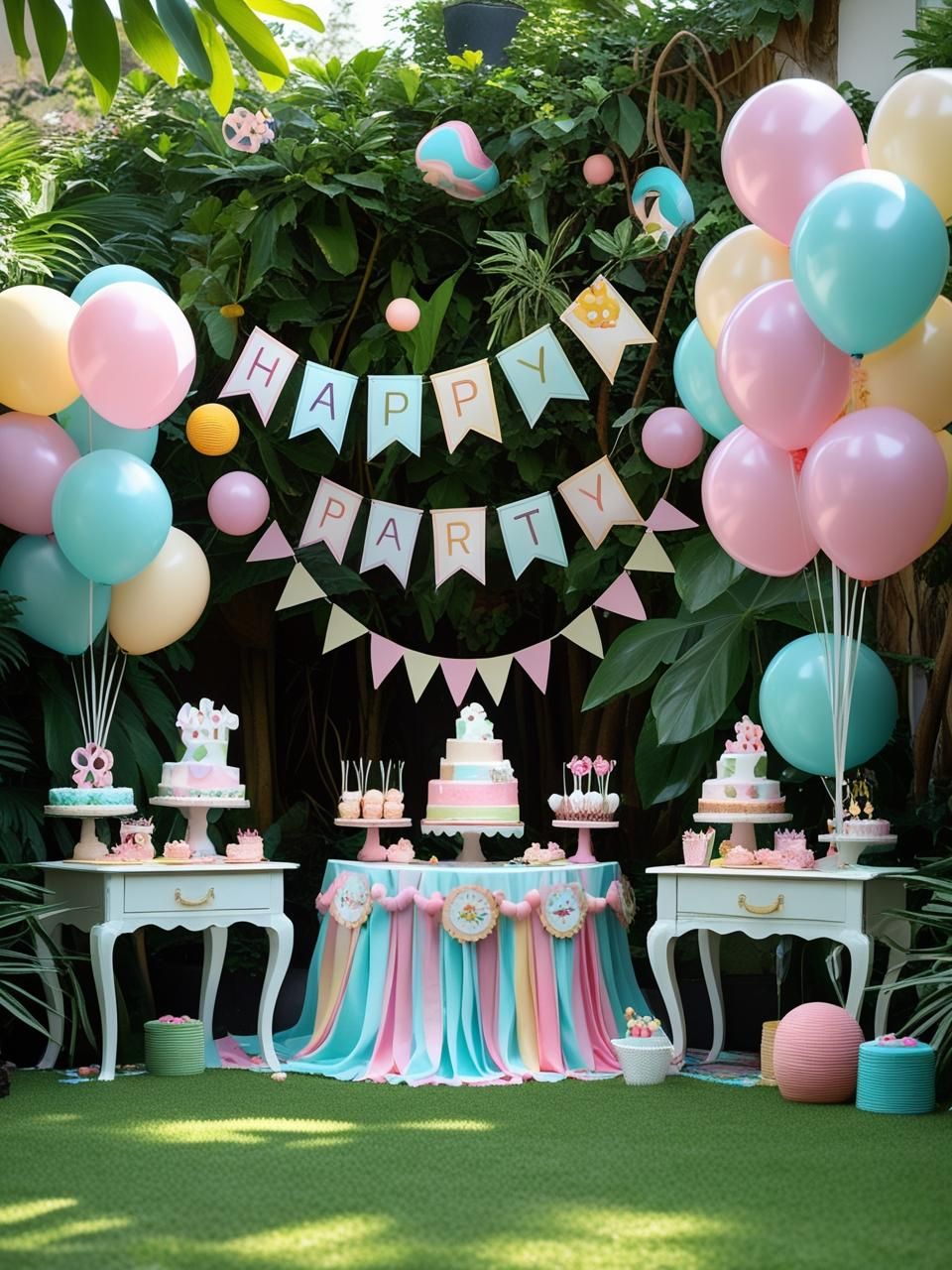
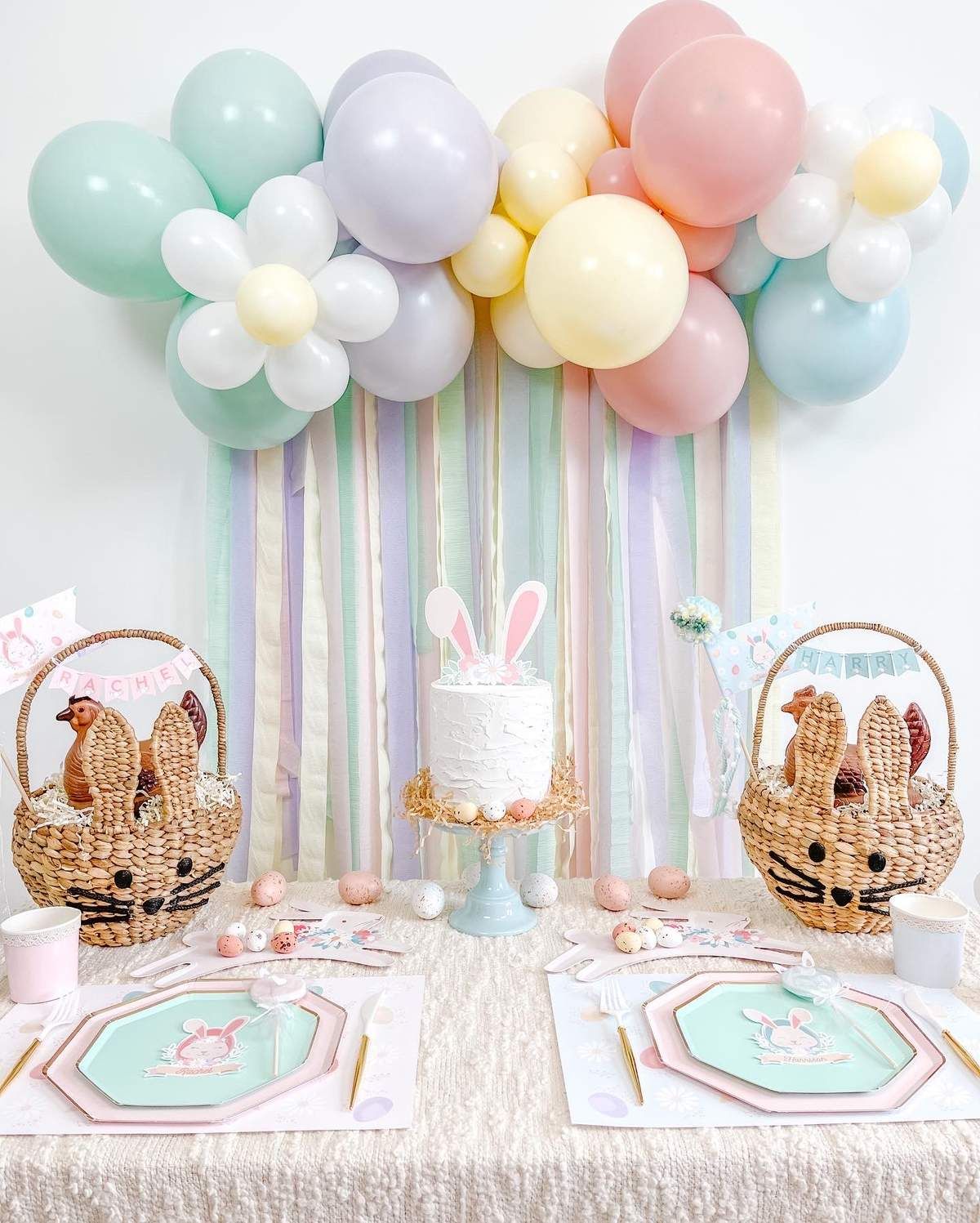
A smaller garland running across one corner of the backdrop can be enough to make the cake table feel like the focal point.
I’d rather have a well-sized 6–8 foot garland that frames the cake beautifully than a giant 15-foot balloon monster competing with the birthday cake.
For a photo backdrop
This is where I’d go bigger.
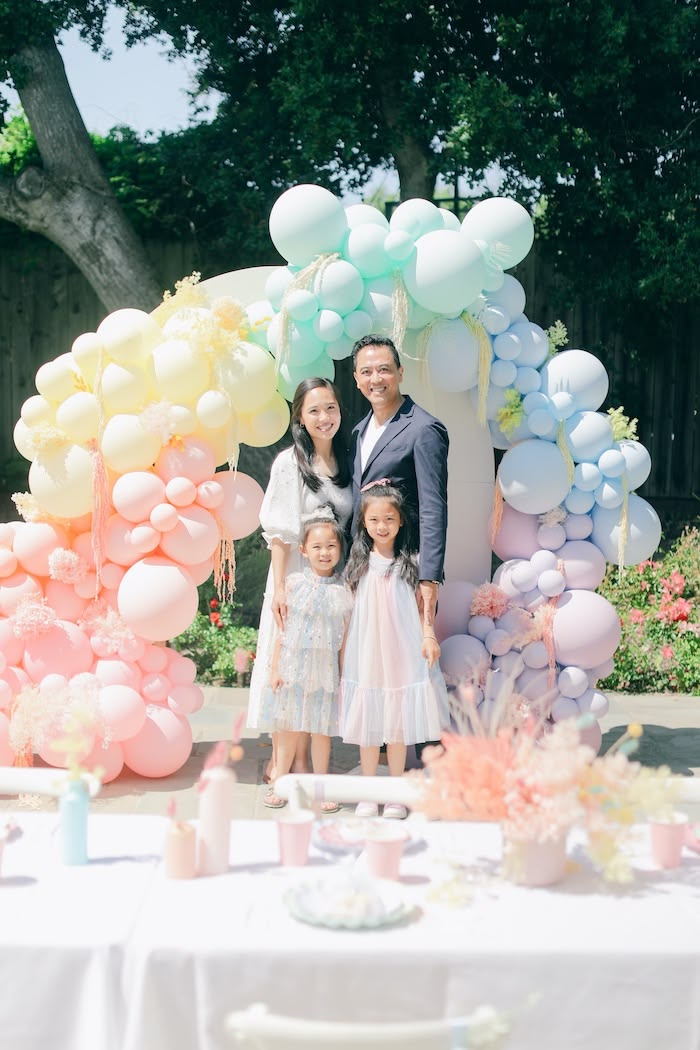
If guests are going to stand in front of it for photos, you want the garland to create a visible frame around the backdrop.
An 8–12 foot garland is a useful starting point for many home setups, but measure your actual design path first.
And remember that people are going to be standing there.
You don’t want a giant balloon cluster sitting directly behind someone’s head like they’re wearing a very colorful helmet.
Balloon Size Changes Everything
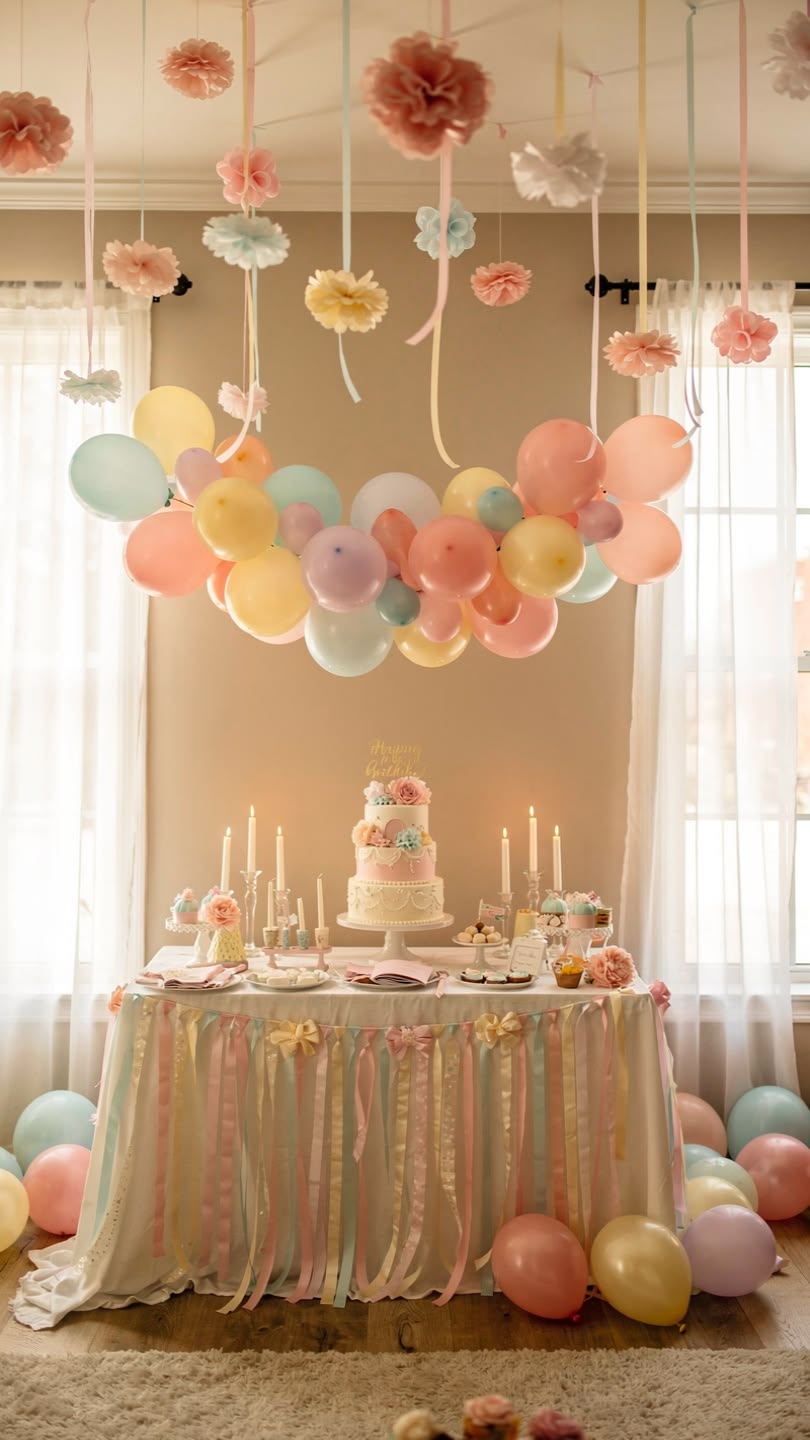
Here’s where things get a little sneaky.
An 11-inch balloon isn’t going to cover the same amount of space as a 5-inch balloon.
And this is why you shouldn’t blindly follow a “100 balloons = 10-foot garland” formula you found online.
The number varies based on balloon size, how tightly they’re clustered, and how full you want the finished garland to look. Decorator references commonly give different balloon-per-foot estimates for different sizes and cluster styles.
For a classic organic birthday garland, I like thinking about the balloons in layers:
- 5-inch balloons: little fillers
- 11-inch balloons: your main workhorses
- 16–18-inch balloons: larger statement balloons
Drevio’s own party setups use combinations such as 5-inch, 11-inch, and 16-inch balloons to create that mixed-size look.
Those little 5-inch balloons are sneaky.
They don’t look like they’re doing much when they’re sitting in the bag, but once you’ve got a big gap between two balloons, suddenly you’re very grateful you bought them.
How Many Balloons Do You Actually Need?
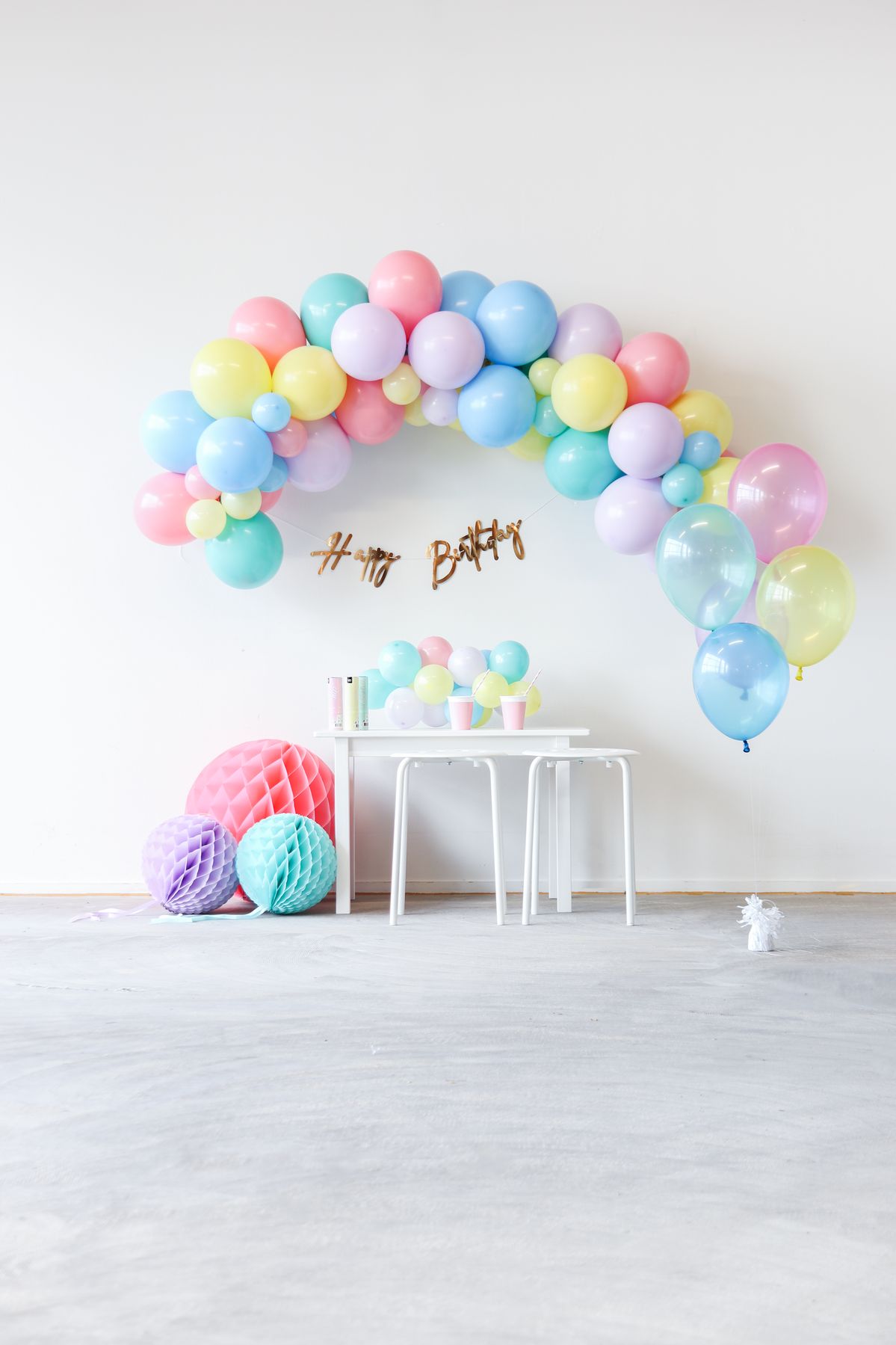
This is where things get messy because different garland styles use dramatically different amounts.
For a fairly standard garland made primarily with 11-inch balloons, around 6–8 balloons per finished foot is a reasonable starting estimate. Fuller organic designs and mixed-size garlands can use considerably more.
So, for a simple estimate:
Garland length × balloons per foot = approximate balloon count
For example:
6-foot garland
At roughly 6–8 balloons per foot:
6 × 6–8 = about 36–48 balloons
8-foot garland
8 × 6–8 = about 48–64 balloons
10-foot garland
10 × 6–8 = about 60–80 balloons
But—and this is important—those numbers are not a shopping list carved in stone.
If you’re making a fuller organic garland with lots of 5-inch fillers and larger balloons, you’ll likely need more.
Some current balloon-decorating guides recommend roughly 8–10 balloons per foot for a standard mixed garland and 12–16 per foot for a fuller organic look.
That’s why I always buy extras.
Please Buy Extra Balloons
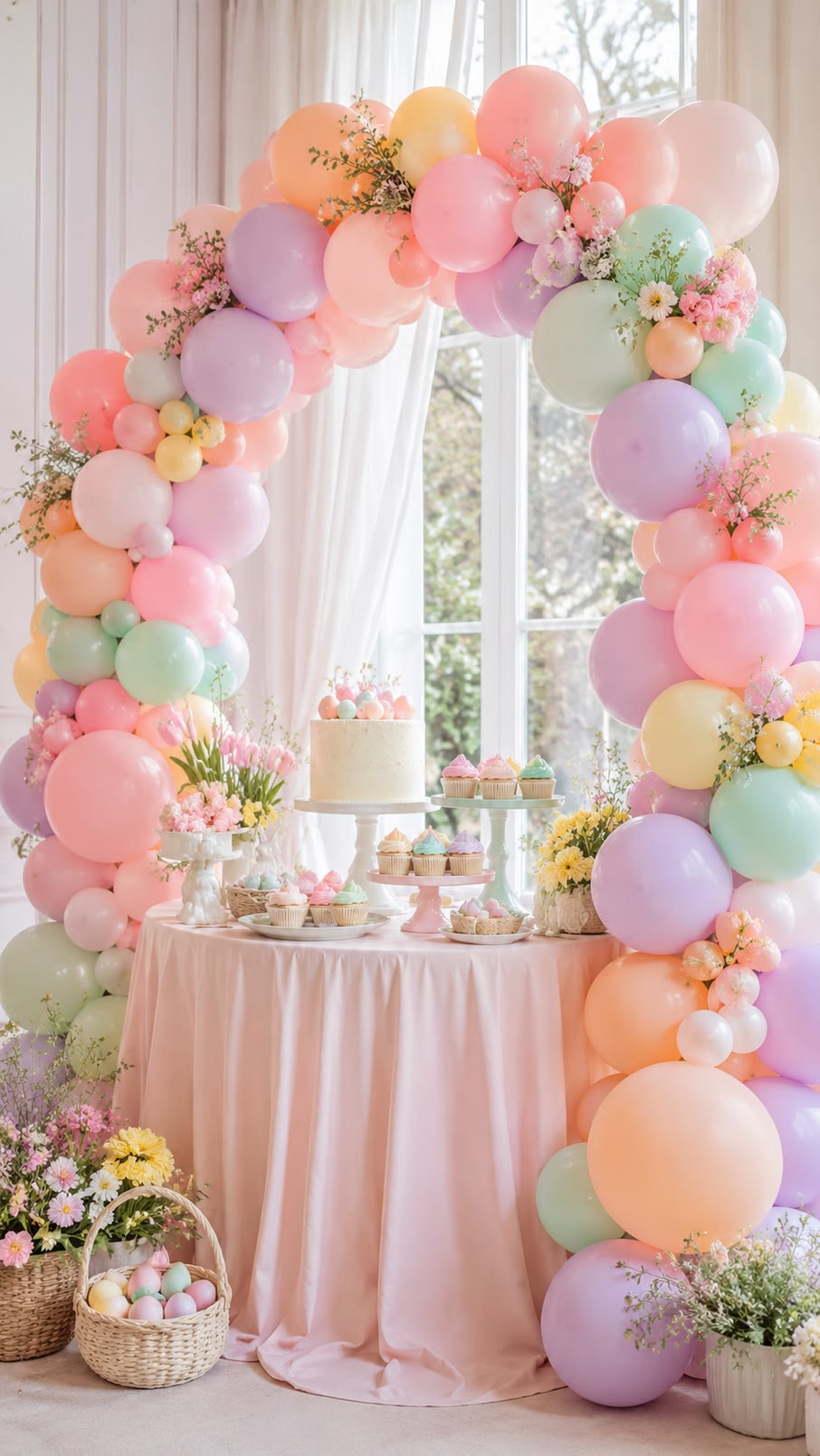
This is the part nobody wants to hear after they’ve already calculated everything perfectly.
Buy extra.
Not because you’re bad at math.
Because balloons are balloons.
One pops while you’re inflating it.
One somehow gets overinflated.
One has a weird little dent.
One mysteriously disappears because your child has decided it’s now a soccer ball.
And then you’ll discover three empty-looking spots in your garland that need filling.
I’d plan on roughly 10–15% extra beyond your estimated quantity for pops, mistakes, and last-minute filling.
If you calculate that you need 80 balloons, don’t buy exactly 80.
I’d rather have a few leftovers sitting in the closet than send Andrew to Target the morning of the party looking for “those specific dusty pink 5-inch balloons.”
That is not a fun Saturday morning.
Don’t Make the Garland the Same Width as Everything
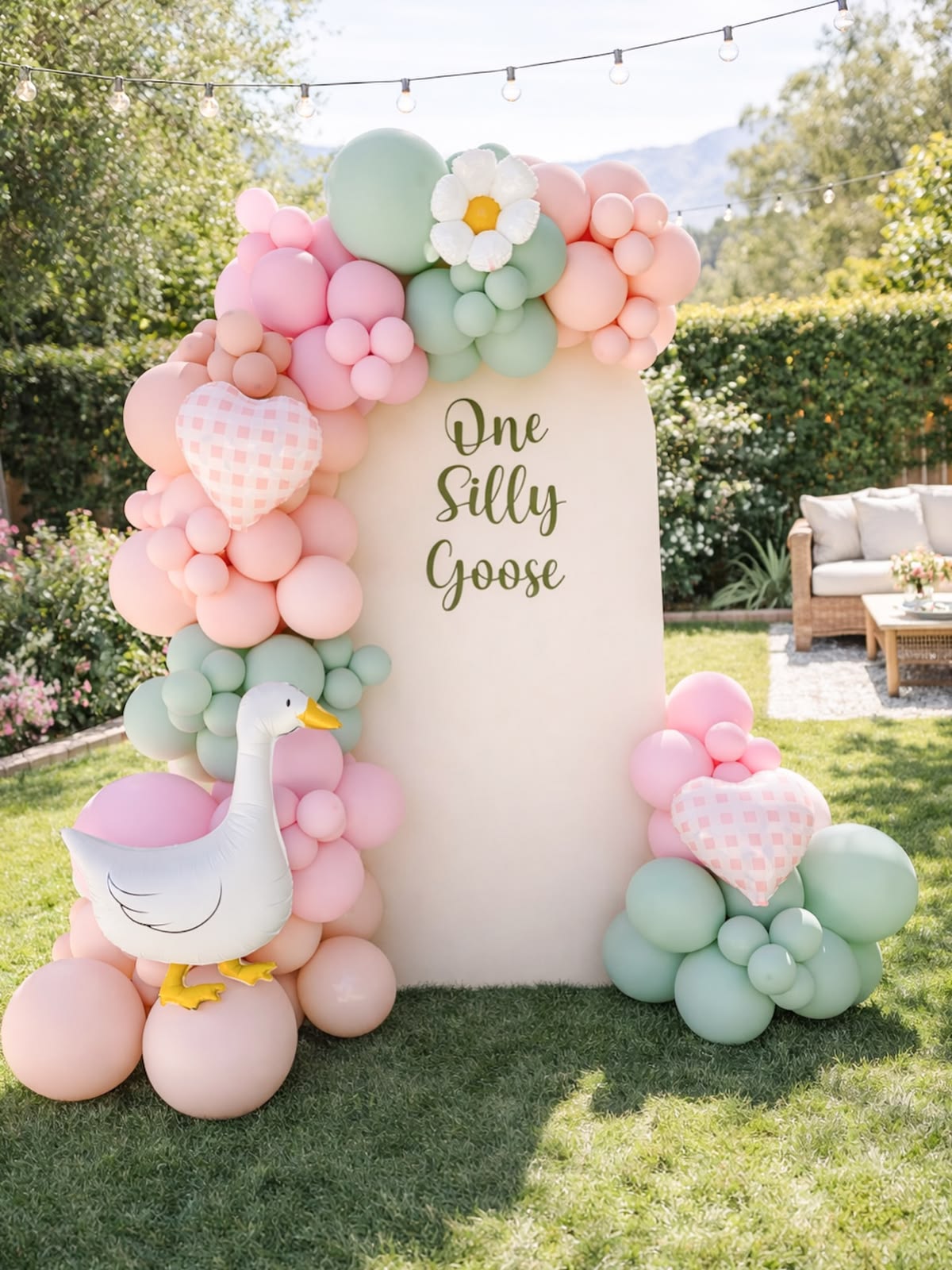
This is another little design trick I’ve learned.
If your backdrop is 8 feet wide, you don’t necessarily need an 8-foot balloon line running perfectly from one side to the other.
An organic garland usually looks better when it has some movement.
For example:
Small corner garland
Starts at the upper left → crosses part of the backdrop → trails down slightly.
Half garland
Covers the top → drops down one side.
Full frame
Runs across the top → down both sides.
Table garland
Runs along the front or back edge of a dessert table.
The same wall can look completely different depending on how you arrange the balloons.
And honestly, I prefer the slightly imperfect organic shape.
It’s a birthday party, not a balloon engineering conference.
What If Your Garland Looks Too Small?
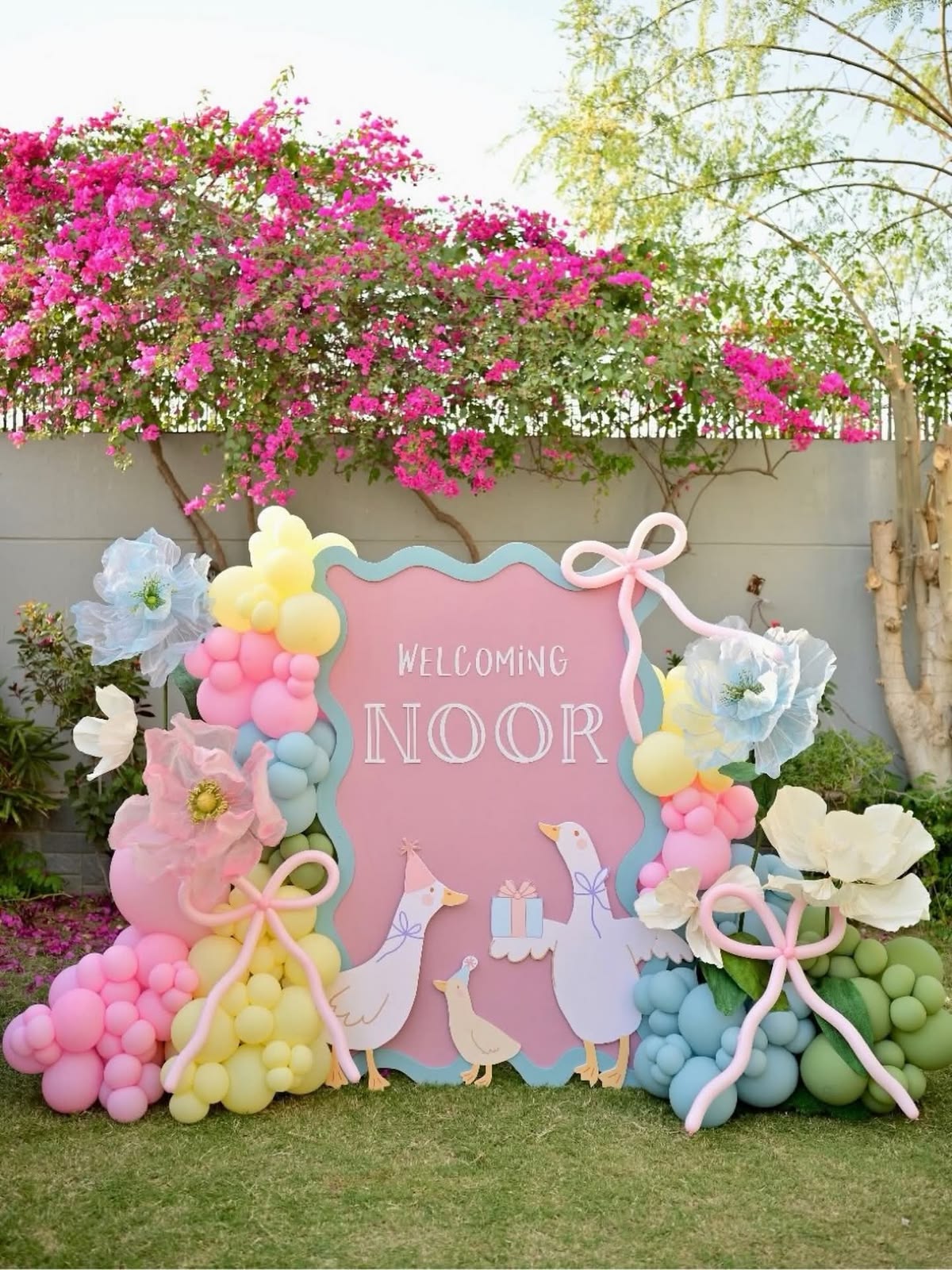
Don’t panic.
This is actually fixable.
Quick fix #1: Add balloons instead of replacing everything
If the garland looks thin, add clusters where you see obvious gaps.
Start with your larger balloons, then use 5-inch balloons to fill smaller spaces.
You don’t need to rebuild the entire thing.
Quick fix #2: Spread it less
If your garland looks too short, don’t stretch it aggressively across the wall.
That will make the balloons look sparse.
Instead, make the garland curve or cluster more tightly.
A shorter, fuller garland usually looks much more intentional than a long, skinny one.
Quick fix #3: Move the focal point
Sometimes the garland isn’t actually too small.
It’s just in the wrong place.
Try moving it closer to the cake, sign, or main backdrop element.
Suddenly it can look much more substantial because it’s framing something instead of floating awkwardly on a giant empty wall.
What If the Garland Looks Way Too Big?
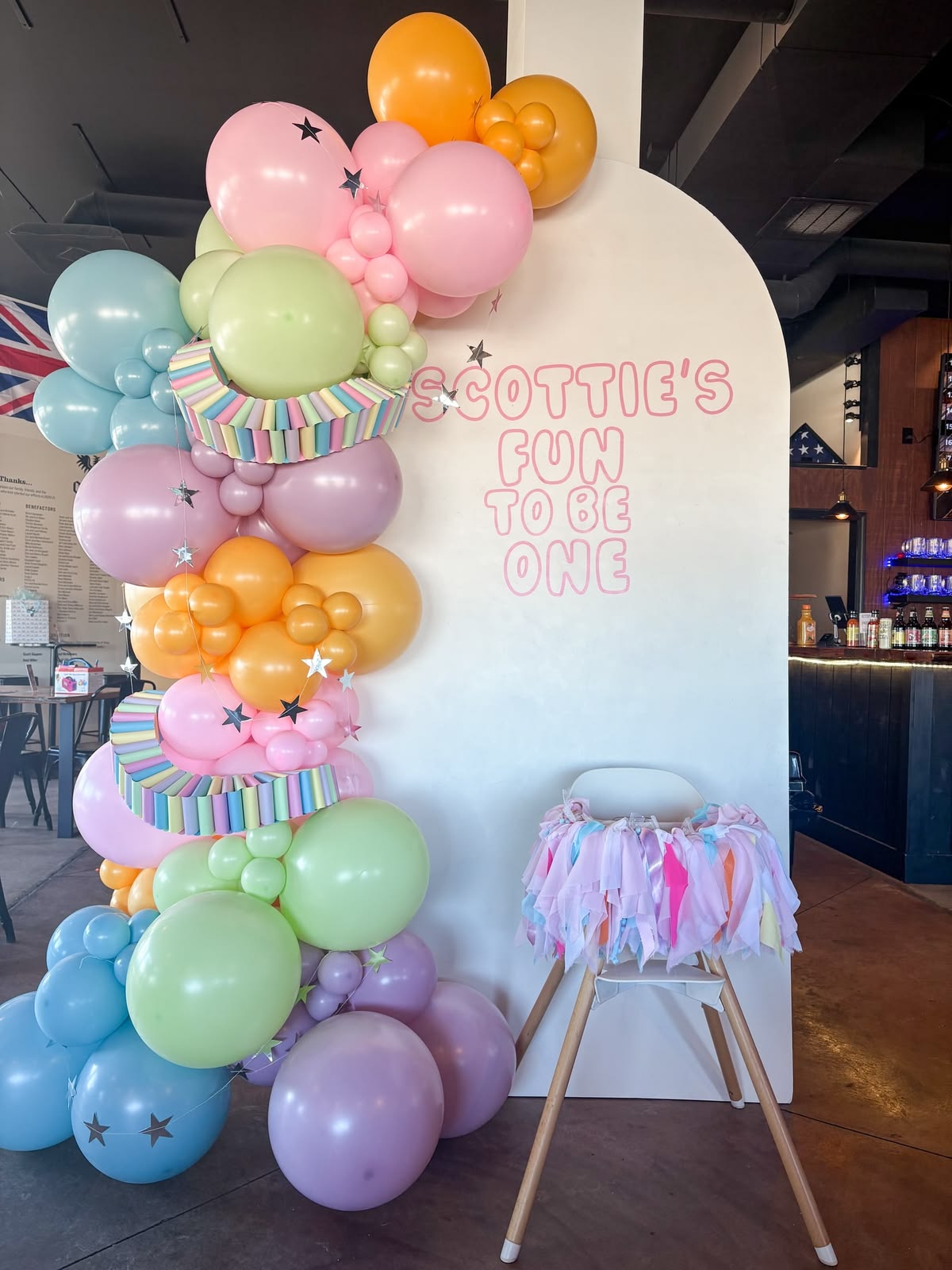
Yep, that happens too.
Especially when you buy one of those giant kits because the product photo made it look like you were getting a whole party in a bag.
If it’s overwhelming the backdrop, remove some of the smaller clusters.
You can also split the garland into two pieces.
One section can frame the cake table, and the extra balloons can become a little cluster near the entrance.
Congratulations.
You accidentally got two decorations out of one purchase.
Mom math.
My Party Decoration Size Guide for Different Setups
If you’re standing in your kitchen right now with a tape measure and absolutely no idea where to start, here’s the cheat sheet I’d use:
Small home party:
Start around 5–8 feet.
Cake or dessert table:
Around 6–10 feet usually gives you plenty to work with.
Standard photo backdrop:
Around 8–12 feet is a useful starting point.
Large backdrop:
Consider 12–16 feet or more, depending on the shape.
Large statement installation:
Measure the entire route first, especially if it curves or drops down multiple sides.
And if you’re mixing 5-inch, 11-inch, and larger balloons, expect your total balloon count to be higher than a simple single-size garland.
One More Thing: Match the Garland to the Invitation
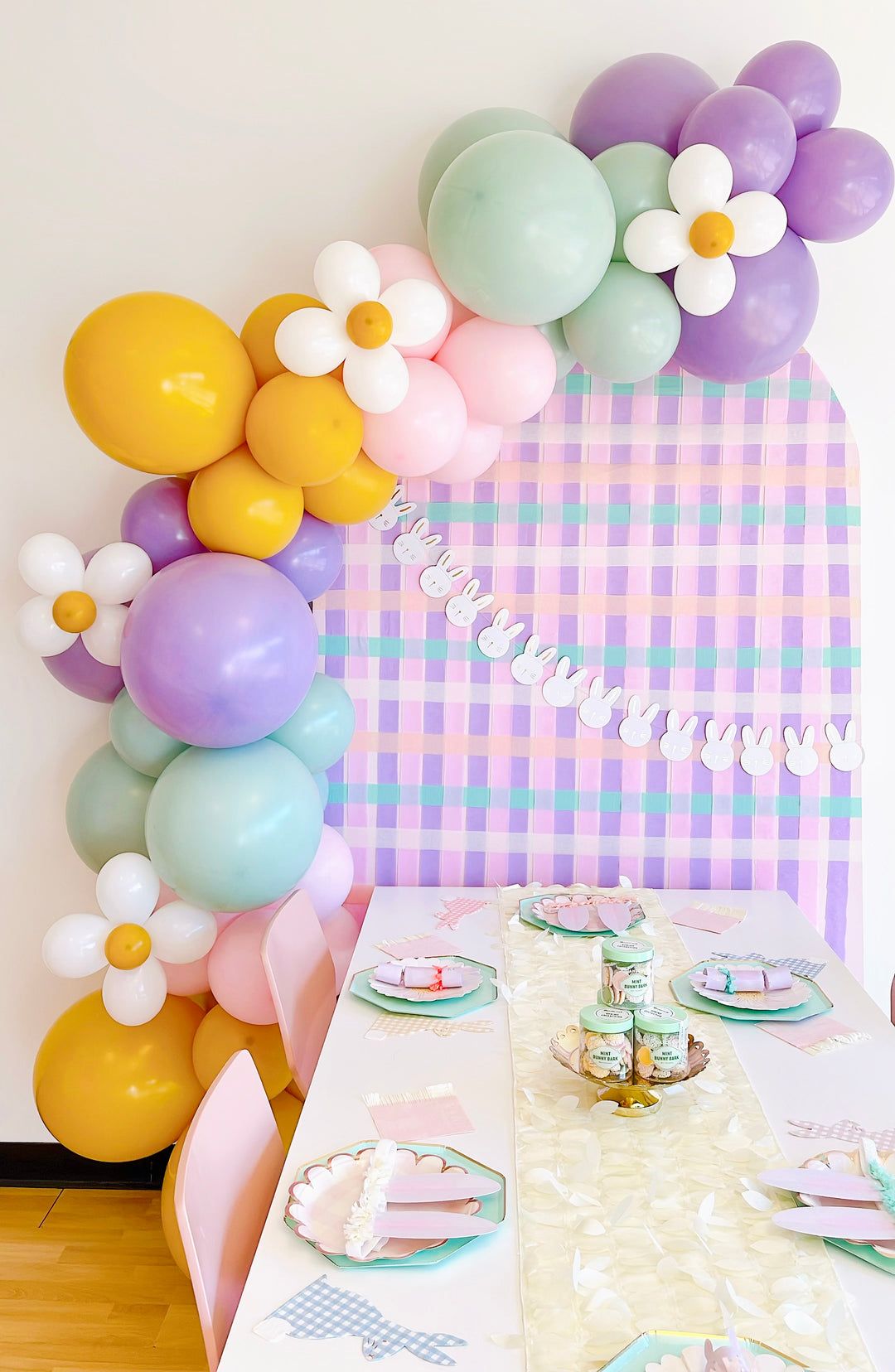
This is probably my favorite part.
I like choosing the invitation design before I go completely crazy buying decorations.
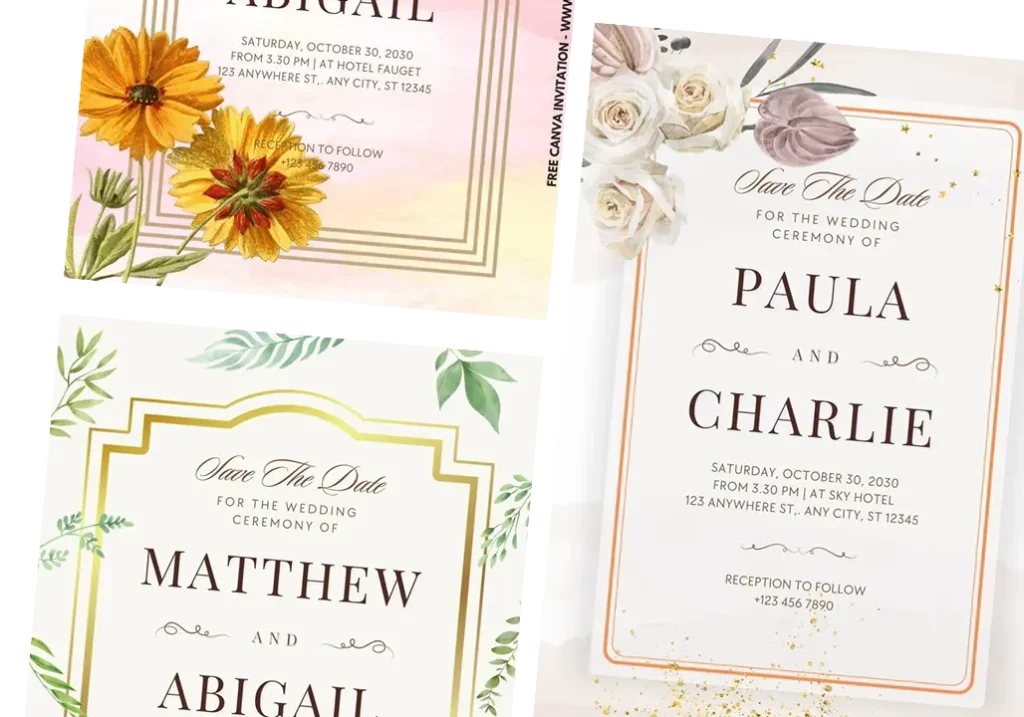
The invitation gives me a starting point for the colors, mood, and overall look. Then I can pull those colors into the balloons, cake table, signs, and little details.
It makes the party feel coordinated without needing every single thing to match perfectly.
For example, if I’m using a colorful balloon-themed invitation, I might pull two or three of its strongest colors into the garland instead of buying seven different balloon colors because I couldn’t make up my mind at Target.
Been there.
If you’re still choosing your invitation, I have a whole collection of free editable balloon birthday invitations on Drevio that can give you a starting point before you start ordering decorations.
My “Do This Before You Buy Balloons” Checklist
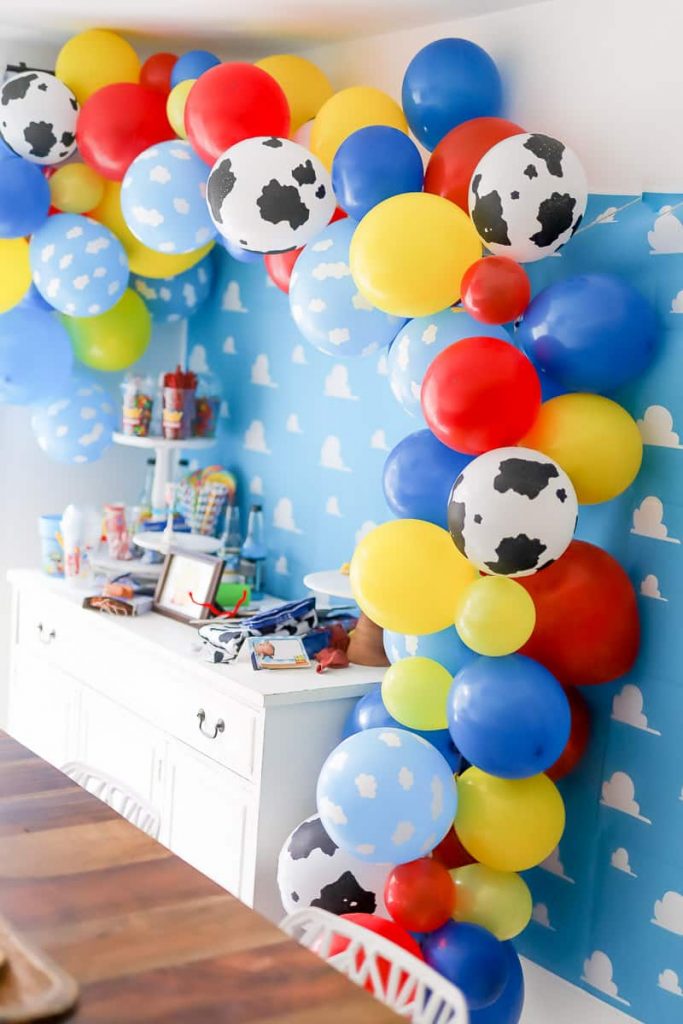
Before you click Add to Cart, grab a piece of paper and write:
☐ What am I framing?
☐ How wide/tall is the actual space?
☐ What path will the garland follow?
☐ Is it straight, curved, or wrapping around something?
☐ How full do I want it?
☐ Am I mixing balloon sizes?
☐ How many balloons does that estimate give me?
☐ Did I add 10–15% extra?
☐ Where will the cake/sign/people actually go?
That’s it.
You don’t need to recreate a professional balloon installation from Instagram.
You need a garland that fits your party, your space, your budget, and your level of patience.
Because if there’s one thing I’ve learned after decorating birthdays for Charlotte and Louise, it’s that the decorations don’t have to be perfect.
The birthday kid is going to see the balloons, see the cake, spot the presents, and immediately forget that one balloon was 2 inches lower than the others.
And honestly?
That’s probably the party I want anyway.